Digital Marketing
SEO
PPC Advertising
Social Media Marketing
Content Marketing
Email Marketing
Web Design & Development
Conversion Rate Optimization
Marketing Analytics
AI Automation
AI Chatbots
Workflow Automation
CRM Automation
Lead Generation Automation
AI Appointment Booking
Dental Implant Marketing: A Guide for Practices
- 01Build a dedicated implant landing page
- 02Educational content that dissolves fear and c
- 03Make the consultation offer irresistible and
- 04Retarget the visitors who did not book
- 05Google Ads for implant keywords, done careful
- 06Track consult bookings, not clicks: your dent
- 07Frequently asked questions
- 08FAQ
A single dental implant case can be worth more than a year of cleanings from one patient. Yet most practices market implants the same way they market checkups: a line on the services page and hope. Hope is not a strategy for your highest-value treatment.
Implant dental marketing is different from general dental marketing because the patient journey is longer, the anxiety is higher, and the decision involves real money. Patients research for weeks. They compare providers carefully. They need education before they need a sales pitch. Here is how practices win those cases systematically.
Build a dedicated implant landing page
Your implants deserve their own page, not a paragraph. A dedicated landing page lets you speak to one patient with one problem: missing teeth, and the fear and cost questions that come with fixing them.
The page needs specific elements. A headline naming the outcome, not the procedure: “Eat, smile, and speak with confidence again.” The implant process in plain language, step by step. Real before and after photos with consent. Financing stated plainly, since cost is the number one unasked question. An FAQ answering “does it hurt,” “how long does it take,” “am I a candidate.” One unmissable call to action: book a consultation.
Keep the page focused. No navigation clutter, no links to unrelated services, no competing offers. Every element should answer one question: why should I trust this practice with my implants? One page, one patient, one action.
This page becomes the destination for everything: your Google Ads, your social posts, your email campaigns, your retargeting. Build it once, build it well, and every other tactic gets more effective. Our dental website design guide covers the conversion principles these pages need.

Educational content that dissolves fear and cost objections
Nobody wakes up excited about implant surgery. Your marketing has to address the two elephants in the room: “Will it hurt?” and “Can I afford it?” Educational content does this better than any ad.
Create content around the real questions. A two-minute video of the dentist explaining what implant surgery feels like. A post breaking down implant costs honestly, including financing. A fair comparison: implants versus bridges versus dentures. Patients researching these topics are weeks from booking. Be the practice that educated them.
Be honest about candidacy. Not everyone qualifies for implants, and saying so builds enormous trust. Content admitting “implants are not right for everyone” converts better than pretending every case is simple. Patients compare you against big promises. Honesty is your edge.
Distribute this content where researchers look: your website blog, YouTube, and as answers on your Google Business Profile. One strong piece of educational content keeps working for years, answering the same objections for every future patient.
Make the consultation offer irresistible and low-risk
The consultation is the bridge between research and treatment. Your job is to make booking one feel easy, valuable, and free of pressure.
Frame it around what the patient gets: a 3D scan, a candidacy assessment, a clear treatment plan with honest pricing. “Complimentary implant consultation including 3D imaging” is concrete. “Call us to learn more” is nothing.
Remove the pressure explicitly, on the page and in the ads: no obligation, no high-pressure sales, you leave with a plan either way. Implant patients fear being sold to almost as much as the procedure. Naming that fear disarms it.
Follow up on consultation requests fast. A patient who requests a consult on Saturday night and hears nothing until Tuesday has already booked elsewhere. Respond within minutes if possible, within the hour at worst. Speed is part of the offer.
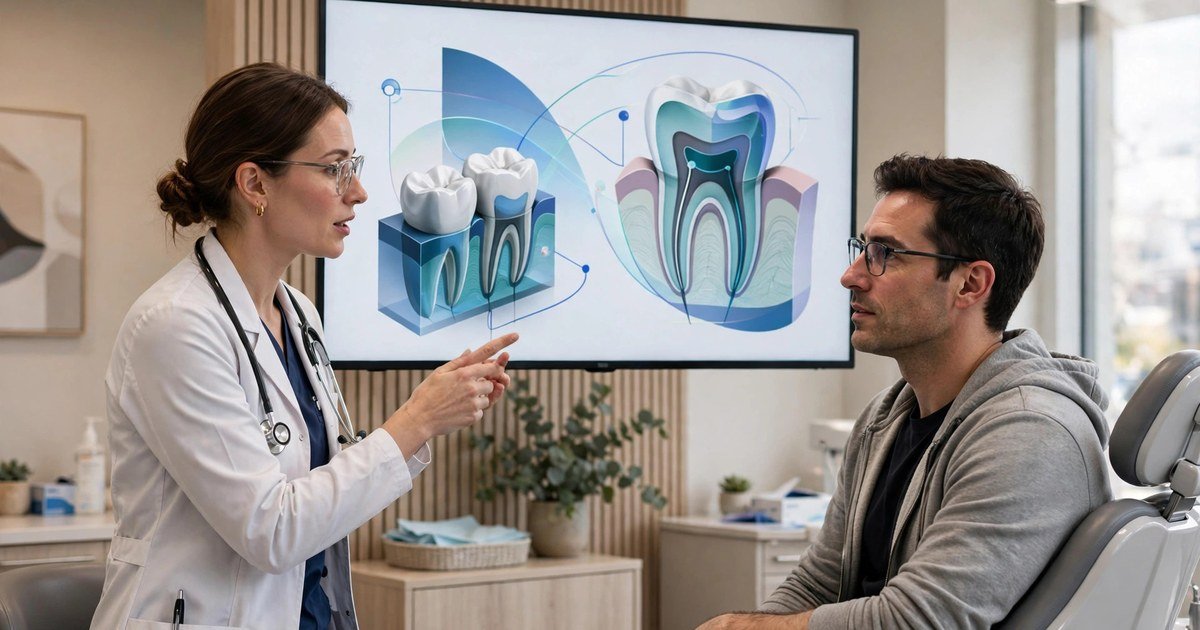
Retarget the visitors who did not book
Most implant page visitors will not book on the first visit. They are researching, comparing, and thinking. Retargeting keeps you in front of them while they decide.
Retarget everyone who visited your implant page but did not book. Show simple, reassuring ads over the following weeks: a patient testimonial, a consultation reminder, an educational clip answering a common fear. You are staying available while they think.
Keep the frequency modest. Seeing your ad twice a day for two weeks is a reminder. Seeing it ten times a day is a reason to distrust you. Cap frequency, refresh the creative monthly, and exclude people who already booked.
Retargeting is usually the most efficient ad spend in an implant campaign because the audience already showed intent. They visited your implant page. They are interested. A gentle, consistent presence converts the researchers that your first impression did not.
Google Ads for implant keywords, done carefully
Implant keywords are expensive because every practice wants them. “Dental implants near me” and “implant dentist” plus your city cost real money per click. That is fine if the math works, and dangerous if you have not done the math.
Only bid where you can name the value of a booked consultation. If one implant case justifies the spend, the clicks are worth it. If you do not know your numbers, fix tracking before spending a dollar.
Send ad traffic only to your dedicated implant page, never your homepage. Match the ad copy to the search: someone searching “how much do dental implants cost” should land on content about cost, not a generic page. Relevance raises your quality score and lowers your cost per click.
Use location targeting tightly. Patients rarely travel far for implants when good options exist nearby, so target your city and suburbs, not the whole metro area. Run ads during hours when someone can answer the phone. Clicks at 3am with no follow-up are wasted. Our PPC advertising services manage high-intent campaigns like these, and our SEO services build the organic rankings that compound alongside.
Consider starting with a modest daily budget and expanding what works. Implant campaigns need weeks of data before you can judge them. One month of patient testing beats one week of expensive guessing.

Track consult bookings, not clicks: your dental implant marketing system
The only metric that matters in dental implant marketing is booked consultations that show up. Everything else is a leading indicator.
Set up conversion tracking for every booking path: online booking completions, consultation request forms, and phone calls from the implant page. Use call tracking numbers so you know which calls came from which campaign. Ask every new implant patient how they found you and record it.
Review monthly. Which keywords produced consultations? Which ads did researchers click before booking? Where did visitors drop off? This tells you where to spend more and what to fix. Practices that track consultations improve every quarter.
Put it together and you have a system. Educational content attracts researchers. The landing page converts interest into bookings. Retargeting recovers the hesitant. Google Ads adds qualified traffic. Tracking tells you what to scale.
Implant cases are the highest-value patients most practices will ever treat, and they deserve more than a line on your services page. Digital Surgeons Hub builds implant marketing systems: landing pages that convert, educational content, ad campaigns, tracking down to the booked consultation. Get a free quote and tell us your implant goals.
Frequently asked questions
What is dental implant marketing?
The strategies practices use to attract implant patients: a dedicated landing page, educational content answering fear and cost questions, consultation offers, retargeting, and Google Ads. The patient journey is longer and the decision involves significant money.
How much should a dental practice spend marketing implants?
Spend only what the math supports: work backward from the value of a booked consultation to a sustainable daily budget. Start modest, track every consultation to its source, and expand what produces booked consults. Never scale before tracking is reliable.
Do Google Ads work for dental implants?
Yes, when disciplined. Bid on high-intent keywords like “dental implants near me,” send traffic to a dedicated implant page, target your local area tightly, and track booked consultations rather than clicks.
What should be on a dental implant landing page?
An outcome-focused headline, the implant process in plain language, real before and after photos with consent, clear financing information, an FAQ answering “does it hurt” and “how much does it cost,” and one unmissable consultation booking button.
How do you market expensive dental treatments?
Lead with education, not discounts. Address fear and cost through honest videos, posts, and FAQs. Offer a low-pressure consultation, state financing plainly, and follow up fast. Trust closes high-value cases, not hype.
How long does it take for implant marketing to work?
Google Ads can produce consultation requests within weeks once the landing page and tracking are ready. Organic rankings and educational content compound over months. Judge a campaign on at least a full quarter of data.
Want This Done For You?
Get a free audit of your current setup and a no-pressure quote. We will tell you honestly what is worth fixing and what is not.
Get Your Free Audit
Free · No pitch decks · No lock-in · Honest feedback either way