Website Templates vs Custom Design: An Honest Guide
Every business owner eventually faces the template question. Website templates promise a professional site for the price of dinner. Custom design promises something unique for the price of a used car. Both promises are partly true and partly marketing. After building hundreds of sites both ways, here is the honest breakdown, plus where to actually find website design inspiration worth copying.
What website templates really are (and are not)
A website template is a pre-built design you customize with your content: your logo, your text, your images, your colors. Modern templates, especially on WordPress, Shopify, and Squarespace, are genuinely good. They are responsive, reasonably fast, and designed by professionals. For many businesses, a well-chosen template with strong content outperforms a mediocre custom design.
What templates are not: unique, perfectly fitted, or free of compromise. Thousands of other businesses may use the same template. The layout was designed for a generic business, not yours, so your content gets squeezed into someone else’s structure. And the more you customize a template to escape its sameness, the closer its cost creeps to custom work, without ever quite arriving.
When templates are the smart choice
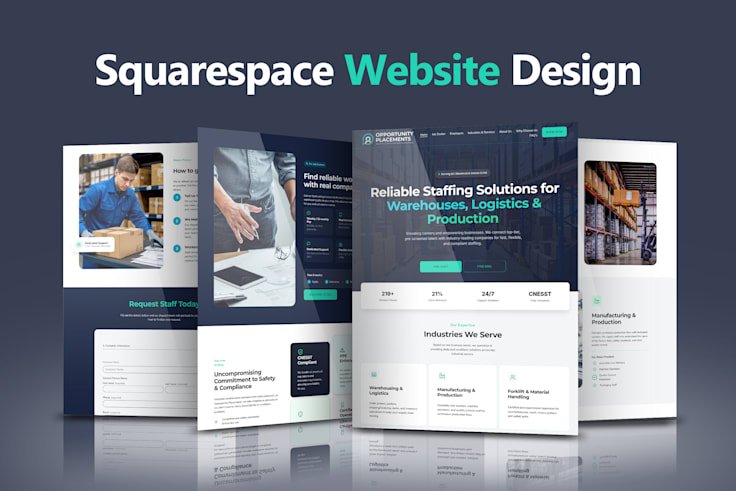
Choose a template when speed matters more than distinctiveness: you need a credible site live this month. Choose it when budget is genuinely tight: a $100 template plus good copy beats a $5,000 custom site with lorem ipsum every time. Choose it for validation-stage businesses: if you are still proving the business model, do not pour money into a monument. And choose it when your content is the star: photographers, writers, and restaurants often need a clean frame, not a custom frame.
The template buyers who regret it share one trait: they expected custom results from a template process. If you go the template route, invest the savings into what actually moves the needle: professional copywriting, real photography, and technical SEO setup. A template with great content beats a custom design with filler, and it is not close.
When custom design earns its price
Go custom when your site is a revenue engine, not a brochure. E-commerce stores, lead generation machines, SaaS marketing sites: these live or die on conversion details no template anticipates. Go custom when your brand cannot afford to look like everyone else: premium positioning and template sameness are incompatible. Go custom when you have unusual needs: complex booking flows, configurators, membership systems, anything the template authors never imagined.
The honest math: custom design typically costs 5-20x a template setup. It earns that multiple when the site’s conversion rate is the business’s growth lever. A template converting at 1% and a custom site converting at 3% is not a design preference, it is a 3x revenue difference. That is the entire business case, and any designer who cannot explain it in those terms is selling decoration.
The middle path: customized templates, done right
Most of our own projects live here, and it is where the value usually is. Start with a solid, lightweight template or starter theme, then customize strategically: the homepage hero, the conversion paths, the checkout or contact flow. You get 80% of custom impact at 30% of custom cost. The key word is strategically: customize where visitors decide (headlines, calls to action, trust signals), leave alone where they do not (footers, admin pages, legal text).
What to avoid: the “fully customized template” that costs nearly as much as custom but inherits all template limitations. If the customization quote approaches custom-design territory, just go custom. And avoid bloated multipurpose themes with 200 demo layouts: they are slow, fragile, and every plugin update is a small heart attack. Lightweight and focused beats feature-packed every time.
Where to find website design inspiration that actually helps
Now the second question: where do you find website design inspo and samples worth learning from? Most inspiration galleries are beauty contests. You need samples selected for business results, not aesthetics. Here is where I actually look.
Your competitors’ live sites, analyzed critically. Not to copy, to diagnose. Which competitor sites make you want to buy? What specifically creates that feeling: the headline, the proof, the simplicity? Tear down three competitor sites and you will learn more than from a hundred gallery screenshots.
Real project portfolios with context. Look for portfolios that describe the business problem, not just show pictures. Our own portfolio of 45 real client projects includes what each site was built to do, because a sample without context is just wallpaper.
High-converting sites in other industries. The best inspiration often comes from outside your field. SaaS companies are masters of clear value propositions. E-commerce leaders obsess over checkout friction. Study the best, then translate the principles to your industry. Good design patterns are portable; copied layouts are not.
Your own analytics. The most underrated inspiration source is your current site’s data. Where do visitors drop off? What do they click? Heatmaps and session recordings show you exactly what your specific audience responds to, which beats any gallery of what worked for someone else’s audience.
How to use inspiration without cloning
Steal principles, not pixels. When a sample inspires you, write down the principle (“the headline states the outcome in eight words,” “trust signals appear before the fold,” “one clear action per section”), not the layout. Then apply the principle to your own content and brand. This is how professionals use inspiration, and it is why their sites feel original even when built on proven patterns.
And beware the inspiration trap: collecting 200 beautiful samples and building none of it. Inspiration is useful for about two hours. After that, it becomes procrastination with better aesthetics. Pick three principles, apply them this week, measure the result.
The bottom line
Templates are a smart starting point and a poor finishing point for businesses where the website drives revenue. Custom design is worth it when conversion is the growth lever, overkill when a credible presence is all you need. And the best inspiration is not a gallery, it is a competitor teardown, a real portfolio with context, and your own analytics. Start where you are, invest where it counts, and measure everything.
Not sure which path fits your situation? Get a free diagnostic. We will look at your current site (or your plans) and tell you honestly whether a template, a customized build, or full custom design makes sense, even if the answer costs us the project.
Frequently asked questions
Are website templates bad for SEO?
Not inherently. A well-coded, fast, mobile-friendly template is fine for SEO. Problems come from bloated multipurpose themes (slow load times hurt rankings) and from duplicate structure (thousands of sites on the same template is not a penalty, but it is not a differentiator either). What matters most for SEO is your content, site speed, and technical setup, all achievable on a good template.
How much does custom website design cost vs a template?
A premium template costs around $50-200 plus setup time; a template-based professional build typically runs in the low thousands; full custom design runs several times that depending on scope. The right comparison is not price but return: if your site drives revenue, the conversion difference between template and custom often pays for itself many times over.
Can I start with a template and go custom later?
Yes, and it is often the smart sequence: validate the business on a template, then invest in custom design once revenue justifies it. Plan for it by keeping your content, domain, and analytics separate from the template, so migration is a redesign, not a rescue mission. Avoid building critical business processes on template-specific features you cannot export.
Where can I see real website design samples?
Look for agency portfolios that show live sites with business context, not just screenshots. Browse our 45 real client projects to see what conversion-focused design looks like across industries, or study top performers in your own market with a critical eye on what makes their sites work.
Ready for a Website That Actually Sells?
Stop guessing. Get a free diagnostic of your current site, or a scoped quote for a new one, and see exactly what is leaking revenue before you spend a dollar.
Get Your Free Website Audit
Free · No pitch decks · No lock-in · Honest feedback either way